The Darriel
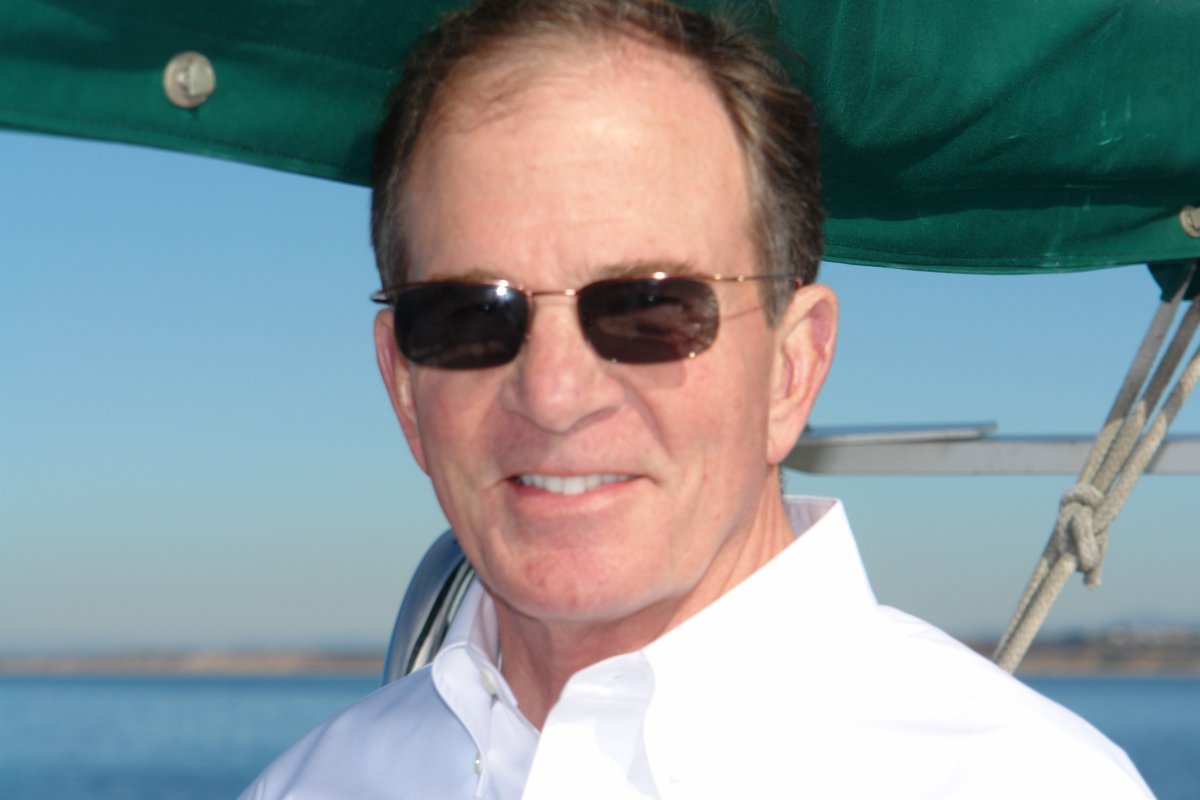
In 1999, my wife and I bought a 1977 Shannon 38 ketch named “Apogee II.” We renamed her “The Darriel” and sailed her frequently on the Chesapeake Bay and subsequently in Louisiana and Florida. She is well built, designed for long ocean passages and she suited our needs and desires. The only downside, besides not having time to sail her often enough, was the auxiliary diesel engine.
I am no mechanic, but over the past decade I have learned more about how to operate, maintain and repair a diesel engine than I ever wanted to know. It was leaky, smoky, smelly and fickle. Especially in cold weather (no glowplugs) the engine was difficult to start. On one sailing outing, the diesel threw a rod and filled the saloon with smoke within minutes as we limped back to the marina. I found my time, effort, anxieties and resources regarding “The Darriel” were disproportionally focused on auxiliary propulsion rather than on all the other things that make owning a sailboat worthwhile.
I am no mechanic, but over the past decade I have learned more about how to operate, maintain and repair a diesel engine than I ever wanted to know. It was leaky, smoky, smelly and fickle. Especially in cold weather (no glowplugs) the engine was difficult to start. On one sailing outing, the diesel threw a rod and filled the saloon with smoke within minutes as we limped back to the marina. I found my time, effort, anxieties and resources regarding “The Darriel” were disproportionally focused on auxiliary propulsion rather than on all the other things that make owning a sailboat worthwhile.
Last year, I had her shipped by truck to Monterey, California. I was advised that I needed a new starter and that at least one of my motor mounts needed to be rebuilt. At that point, as I was exploring my options, I ran across a magazine article by James Lambden regarding electric propulsion. Seeing that he was fairly nearby in Santa Barbara, I gave him a call. Shortly after that, he came to Monterey and we spent a couple of days interviewing each other and discussing a plan for replacing my diesel engine with electric drive.
This was not a cookie cutter solution. It took several months to complete, with a lot of creativity and patience on James’s part. And because I am no more an electrician than I am a mechanic, it took a good bit of faith on mine. I wanted simplicity in both design and operation and we were somewhat limited in the space that I was willing to commit to the system.
I am absolutely delighted with the outcome. I have been day sailing on the Monterey Bay at least once a week for the last few months in blissful clean, green, hassle free silence. To get underway, all I do is cast off lines, turn the key and go. There is no routine maintenance for the motor. The only thing I monitor is the battery charge. My boat is cleaner than it has ever been and has no smell of diesel fuel, oil, coolant or smoke. And, because I have no engine maintenance, I can spend more time tending to sails, lines rigging, etc.
”The Darriel” displaces 18,500 lbs. We installed a 10KW electric motor powered by 24 lithium iron phosphate batteries wired in series that produce a nominal 84 volts. The motor and batteries fit snugly in the engine compartment so the weight trade off with the diesel engine removed is negligible. I did not want a separate battery bank for house power, so James installed a converter to run the 12 volt system. For now, I plug into shore power to recharge, but the next step will be to mount a couple of solar panels atop my dinghy davits. James also provided me with the ability to motor indefinitely at about 4 knots using a portable generator. This is a reassuring capability, but not one that I have needed so far.
This was not a cookie cutter solution. It took several months to complete, with a lot of creativity and patience on James’s part. And because I am no more an electrician than I am a mechanic, it took a good bit of faith on mine. I wanted simplicity in both design and operation and we were somewhat limited in the space that I was willing to commit to the system.
I am absolutely delighted with the outcome. I have been day sailing on the Monterey Bay at least once a week for the last few months in blissful clean, green, hassle free silence. To get underway, all I do is cast off lines, turn the key and go. There is no routine maintenance for the motor. The only thing I monitor is the battery charge. My boat is cleaner than it has ever been and has no smell of diesel fuel, oil, coolant or smoke. And, because I have no engine maintenance, I can spend more time tending to sails, lines rigging, etc.
”The Darriel” displaces 18,500 lbs. We installed a 10KW electric motor powered by 24 lithium iron phosphate batteries wired in series that produce a nominal 84 volts. The motor and batteries fit snugly in the engine compartment so the weight trade off with the diesel engine removed is negligible. I did not want a separate battery bank for house power, so James installed a converter to run the 12 volt system. For now, I plug into shore power to recharge, but the next step will be to mount a couple of solar panels atop my dinghy davits. James also provided me with the ability to motor indefinitely at about 4 knots using a portable generator. This is a reassuring capability, but not one that I have needed so far.
The obvious trade off of this electric solution is range under auxiliary power. For day sailing on the Bay, I have yet to draw the batteries below 89% capacity. However, I certainly don’t have the ability to motor for 2 or 3 days without refueling that I had with my diesel engine. It is that trade off decision that brings some people to the hybrid solution.
For me, however, I don’t want diesel fuel on my boat any more and what I have now is perfect. James Lambden, through profound understanding of electric propulsion and creative, meticulous attention to detail, basically made over my sailboat. It is so much fun to just turn the key and go!
Daniel O
Daniel O